
7 Things About Ankle Pain I Wish I Could Tell Every Patient


Last month a man sat in my office and told me he was ready to give up. He couldn't sleep. He couldn't reach the shelf above his head. He couldn't buckle his own seatbelt. His doctor told him it was 'just part of getting older.' That man didn't need surgery. He needed something nobody had offered him yet. I've treated over 8,000 shoulder patients in my 24 years as an orthopedic surgeon. Rotator cuff tears, frozen shoulders, post-surgical rehab, chronic pain that won't go away. And the hardest talk I have is when someone sits across from me and says 'I guess I just have to live with it.' Because most of the time, that's not true. And until recently, I didn't have a good way to help them. Here's what I discovered.
Your Shoulder Isn't 'Just Wearing Out.' It's Failing to Repair Itself.
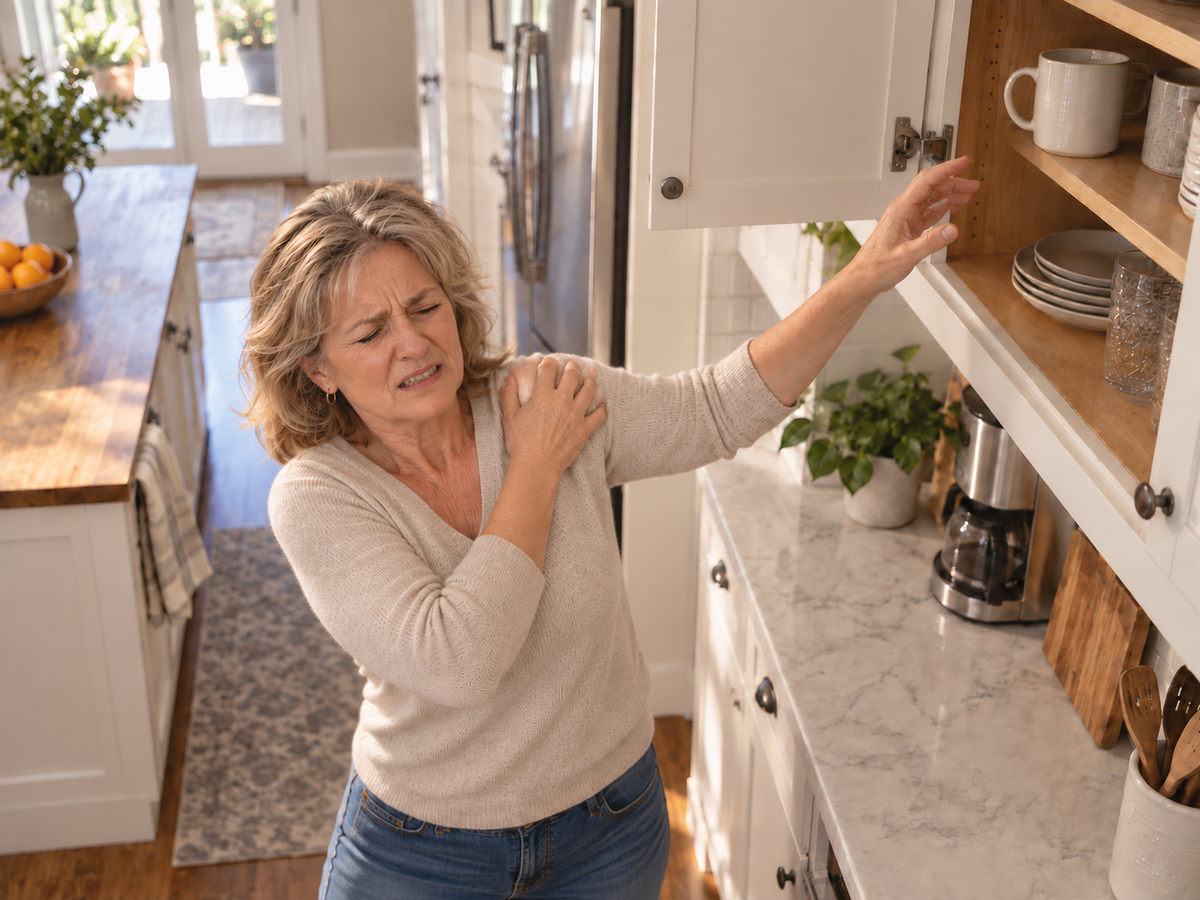
I hear it every week. Someone who used to reach overhead without thinking now winces grabbing a coffee mug. They can't sleep on their side. Getting dressed is a battle. They all say the same thing: "I think it's just age."
It's not aging. It's a repair problem. Your shoulder runs on four small tendons called the rotator cuff. After 50, blood flow to those tendons drops. Without that blood, the tissue can't fix the tiny tears that happen with normal use. Those tears add up. The pain starts — and doesn't stop.
But a breakthrough in tissue repair science has changed everything I tell my patients. This can be fixed. Not by masking the pain. By restarting the repair your body quit doing on its own.
Why it gets worse, not better: It starts small. A little stiffness in the morning. A twinge when you reach behind your back. You tell yourself it's a bad day. Then the bad days stop ending. You can't lift your arm above your head. Women can't hook their bra. Men can't reach their back pocket. You can't wash your own hair. You wake up every time you roll onto that side. And you start doing less because everything hurts more.
The Three Things Breaking Down Inside Your Shoulder Right Now
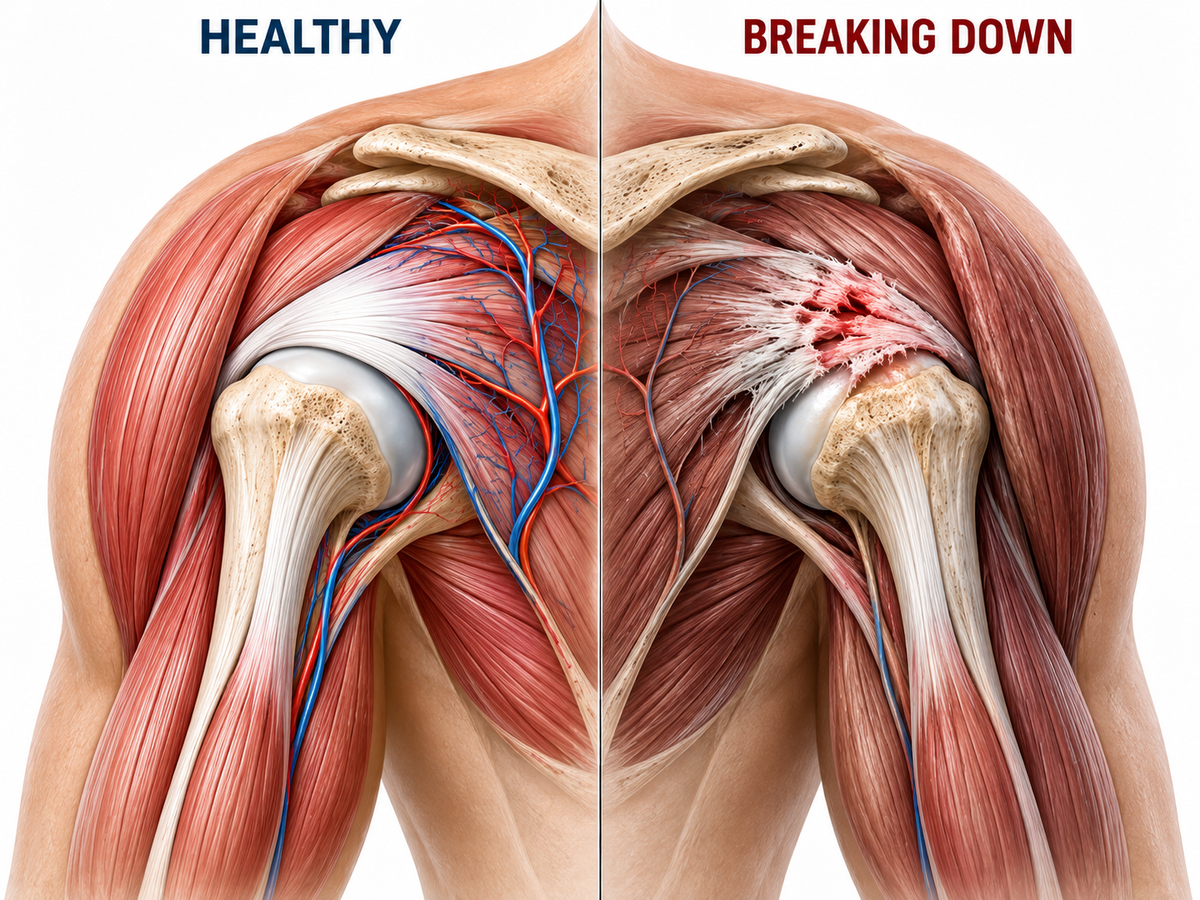
1.) Your rotator cuff tendons run on very little blood flow. After 50, that supply drops even more. Without it, small tears that should heal in days just stay there — and grow.
2.) Your body makes less collagen — the protein holding your tendons together. They weaken. That's why your shoulder feels unstable. Why reaching overhead feels risky instead of natural.
3.) The muscles around the joint are shrinking. Without enough blood flow, they can't recover from normal use. That's why your arm feels heavy. Why carrying groceries or opening a door suddenly feels hard. They're not aging — they're failing to recover.
My doctor kept saying 'it's just a rotator cuff thing, you're 58.' But I couldn't sleep through the night. I couldn't reach the top shelf. I knew something more was going on than just 'getting older.'
The Two Compounds Orthopedic Surgeons and Professional Athletes Have Been Using for Years
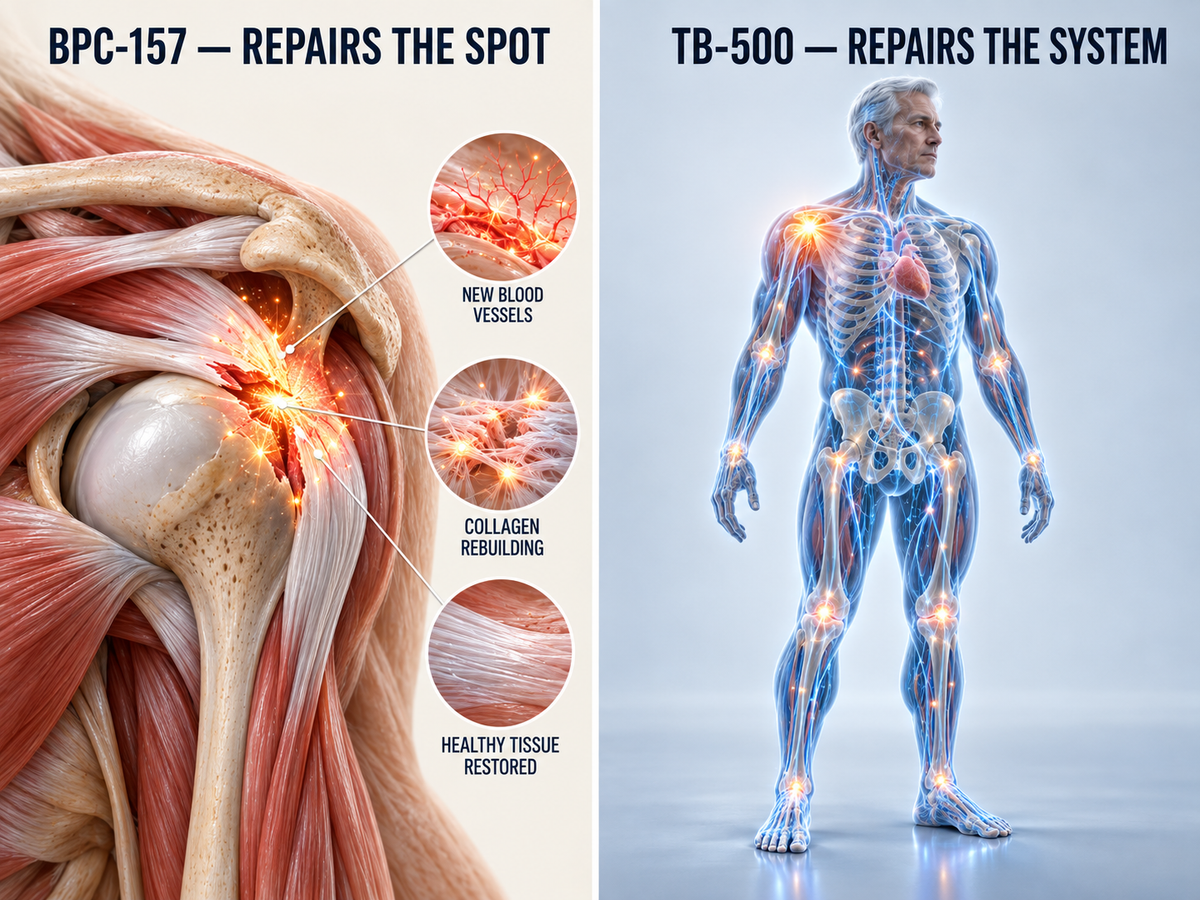
For years, the most effective tools I had for shoulder recovery were two peptides: BPC-157 and TB-500. Professional athletes use them. Olympic trainers use them. Orthopedic surgeons use them to rebuild rotator cuffs, labrum tears, and frozen shoulders.
They're not new. They're not experimental. They're the most researched peptide combination in tissue recovery — period.
BPC-157 stands for Body Protection Compound. Your body already makes it in your stomach lining. It tells your body where to send repair signals. TB-500 is a man-made copy of a protein in nearly every cell in your body. It controls how cells move to damaged areas.
Together, they don't mask pain. They fix what's causing it.
BPC-157 has been studied since 2003 with consistent results across tendon, ligament, and muscle healing. It's safe and well absorbed in humans. TB-500 is a man-made copy of a protein already in your body. Safety studies on both found no harmful dose. Over two decades of clinical use.
How These Compounds Rebuild Strength, Mobility, and Comfort — From the Inside
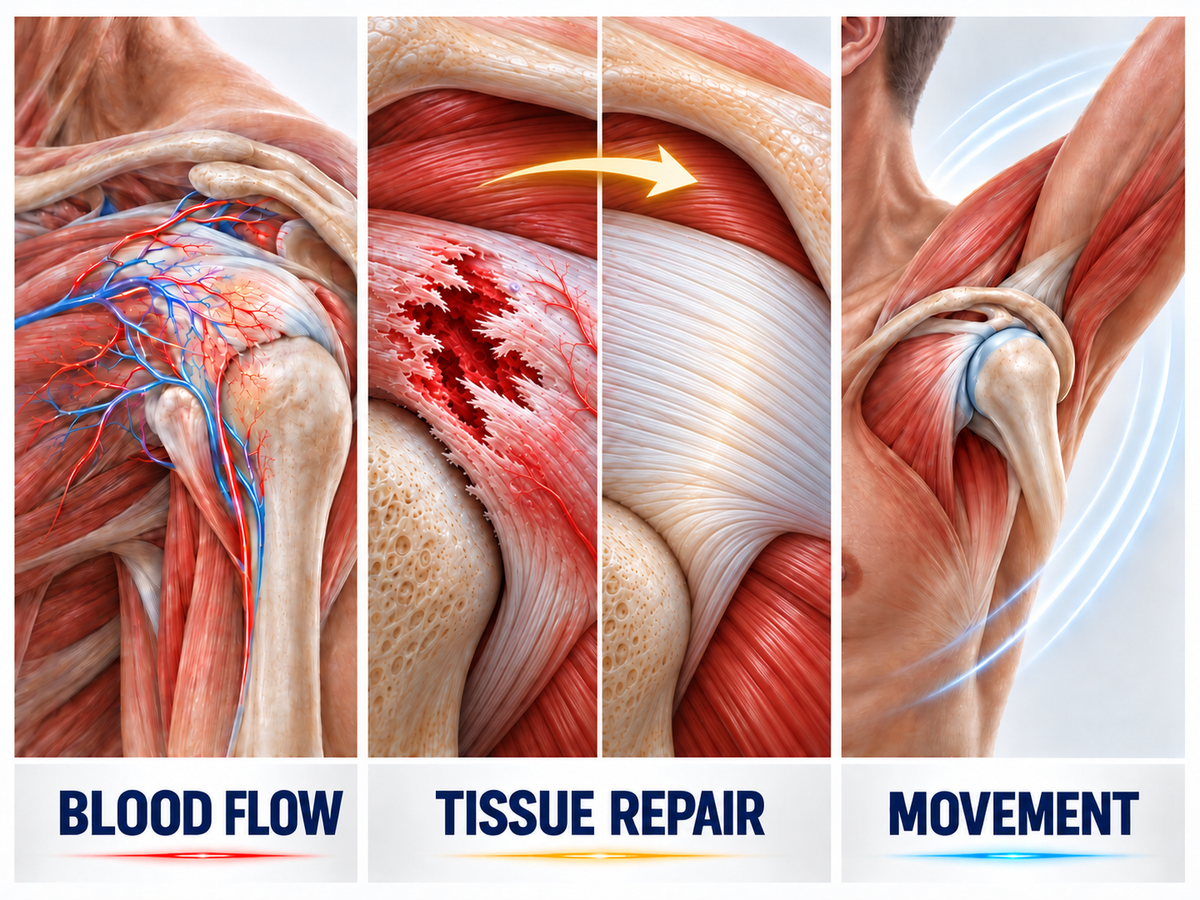
BPC-157 grows new blood vessels right where the blood flow dropped off. Starved rotator cuff tissue gets oxygen again. The small tears that kept getting worse finally start closing. Collagen rebuilds. Tendons strengthen. Reaching for the top shelf stops feeling risky. Reaching behind your back becomes possible again.
TB-500 sends repair cells into the damaged tissue and loosens what's locked up. The stiffness fades — not because the pain is hidden, but because the tissue is flexible again. Frozen shoulder patients start getting range of motion back. Rotator cuff tears start closing. The shoulder starts working the way it used to.
The difference between masking and repairing: The difference between masking and repairing: Cortisone numbs the signal. Pain pills suppress the swelling. PT strengthens around the damage but can't fix it. None of them repair the torn tendon causing the problem. These peptides do. One approach manages. The other fixes what's actually broken.
Why I Stopped Telling My Patients to Get Injections
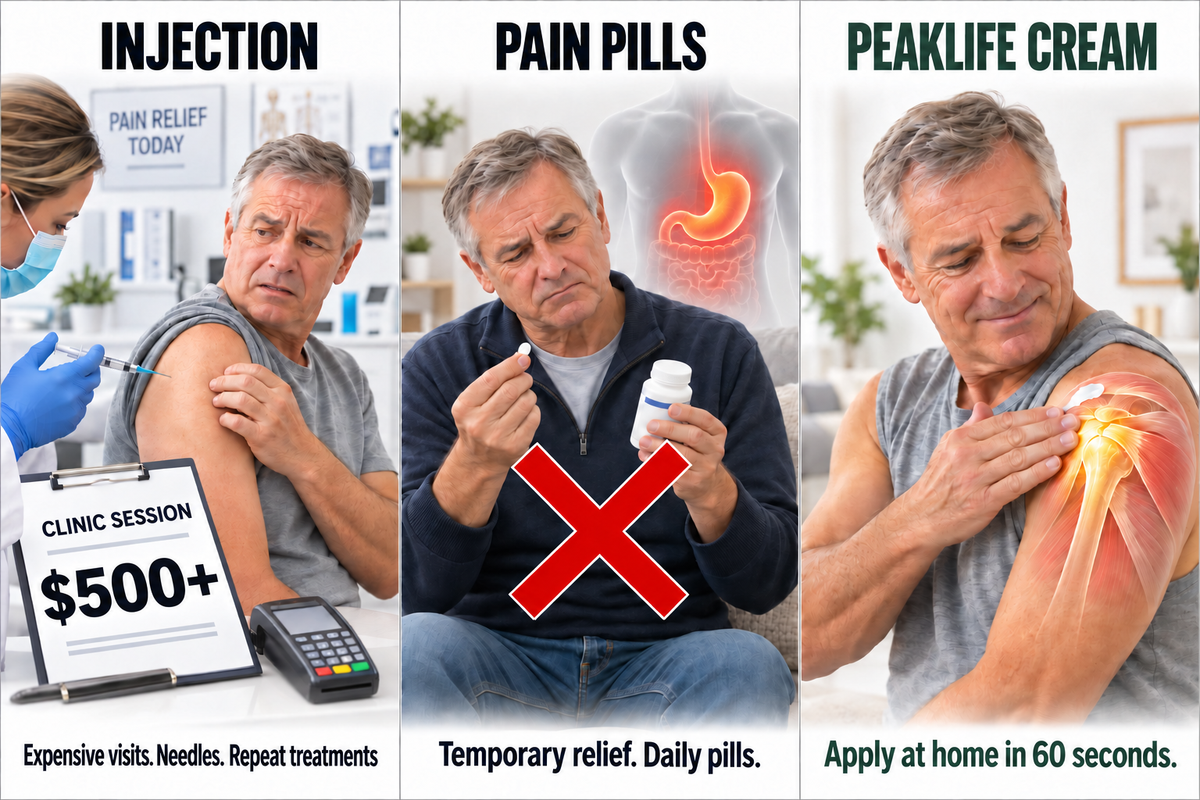
For years, the only way to get these compounds was with a needle. $200 a session. Clinic visits. Most people quit within weeks because the cost and hassle were too much.
But everything changed when peptide recovery cream became available. You rub it directly on your shoulder. It absorbs through the skin, straight into the tissue underneath. No needles. No clinic. No appointments. You do it at home in 60 seconds.
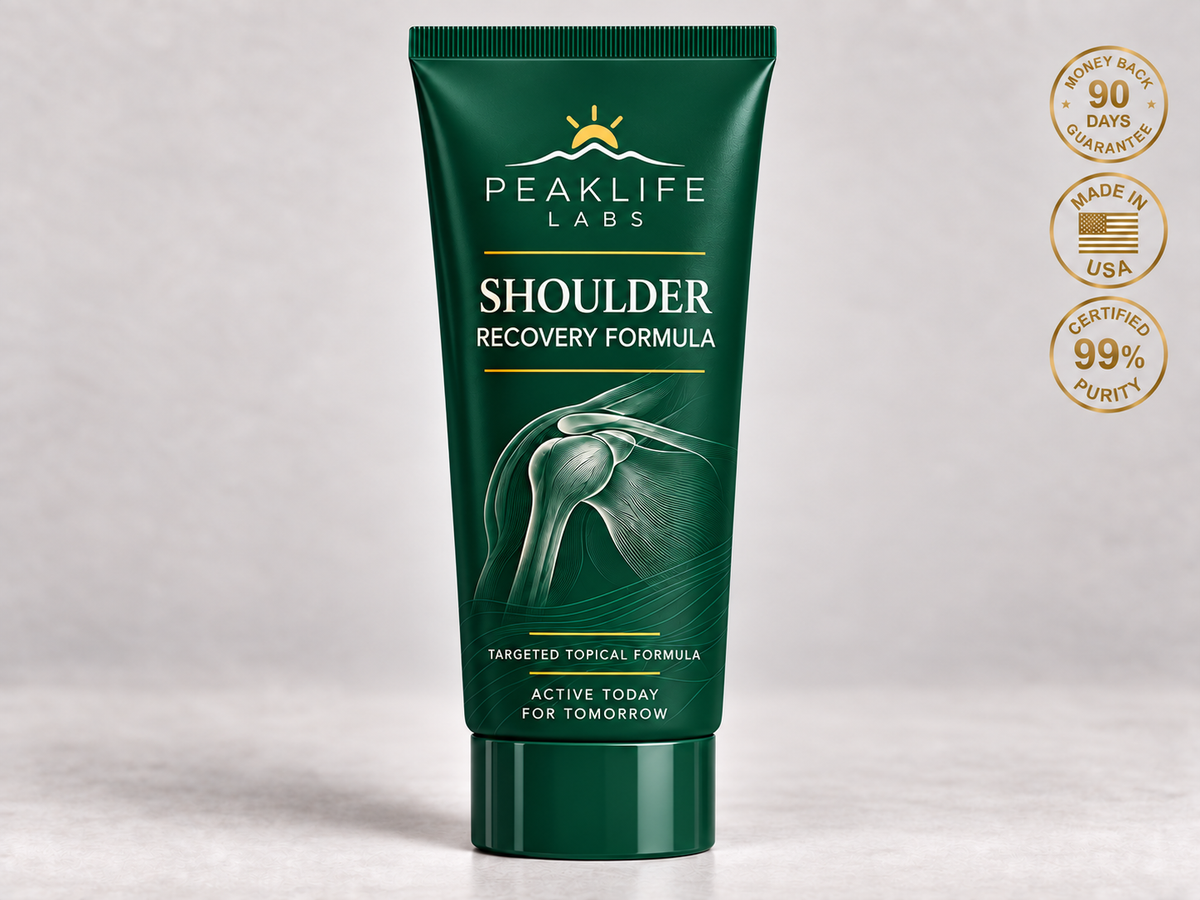
The brand I recommend is PeakLife Labs. They're the only company that combines BPC-157 and TB-500 in a targeted recovery cream. Everything else is injectable. The cream took that problem off the table completely.
Why a cream, not a pill or a brace: Pills get destroyed by stomach acid before they ever reach your shoulder. That's why glucosamine, turmeric, and collagen powders never worked. Braces hold the joint still — they don't repair anything. A cream goes right where the damage is. Through the skin, into the tissue. No detour through your stomach. No sitting still hoping a brace fixes what's broken inside.
What My Patients Are Reporting Back — Week by Week
This is what makes peptides different from everything else. They work. And they work fast. No waiting months wondering if something is happening. Most people notice the first change within days.
Within 3–5 days the shift starts. The sharp pain when reaching dulls. Morning stiffness clears faster. Sleeping on that side becomes possible — maybe not all night, but enough to notice.
You start doing things you'd given up on. Reaching a high shelf. Putting on a jacket without wincing. Lifting a bag of groceries with that arm. The range of motion is coming back.
The constant ache fades. You stop guarding the shoulder. You use both arms without thinking about it. This is when patients tell me 'I feel 10 years younger.'
Strength fills back in. You're reaching overhead, carrying things, sleeping through the night. Golf, swimming, gardening, playing with the kids — they start coming back.
Your shoulder is yours again. Not just moving — living. You stop bracing every time you reach. You stop canceling plans. You're back to the life you had before the pain took it.
❌ Injectable Peptides
- Requires clinic visits
- Painful needle injections
- $200+ per session
- Ongoing appointments
✅ PeakLife Labs Drops
- Take at home
- No needles, no pain
- Simple daily routine
- No clinic visits
By day four, I noticed I could reach the car visor without that sharp catch. By week two, I slept on my right side for the first time in eight months. By week four I was carrying grocery bags with both arms again. I'm 63. I didn't think I'd get that back.
Why Every Day You Wait Matters
Every day you wait, the damage gets worse. Blood flow drops. Collagen thins. Muscles lose ground. A partial tear becomes a full tear. A stiff shoulder becomes a frozen shoulder. A frozen shoulder that could recover in weeks takes months — then years.
Most people think they just have to live with it. They think this is what aging feels like. They don't know the science exists. They just know it hurts to reach. They just know they can't sleep.
You don't have to keep living like this.
Try it for 90 days. If your shoulder isn't moving easier, hurting less, and feeling stronger — full refund. No paperwork. We take the risk so you don't have to.
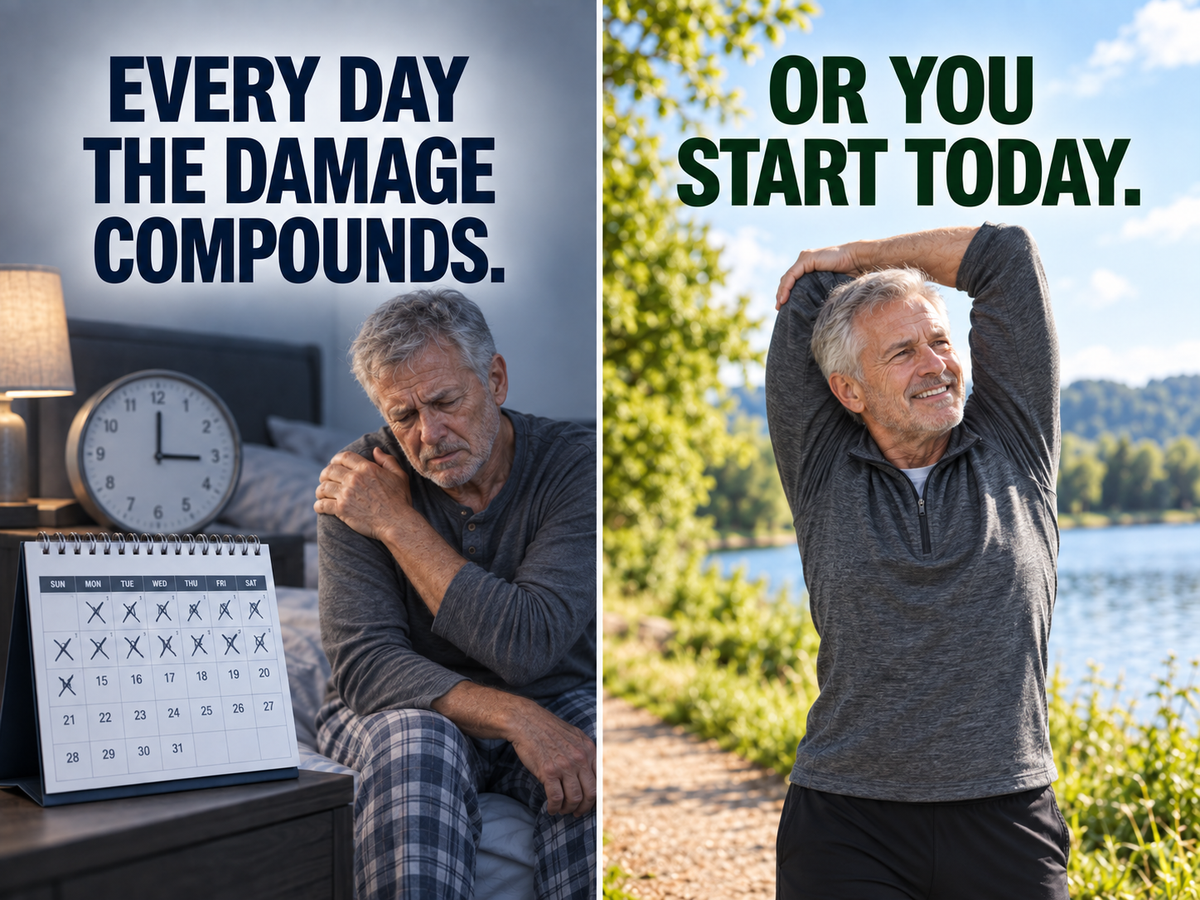
My orthopedic surgeon asked me what I was doing differently because my shoulder was recovering faster than anything he'd tried. I'm 67. I'm playing golf again for the first time in two years.
You're still reading. That tells me something.
You're the kind of person who doesn't accept 'just live with it' as an answer.
You've tried the cortisone shots. You've tried the physical therapy. You've tried pushing through. And you're still in pain. This is the part where you try something different.
Your Shoulder Can Get Better. This Is How You Start.
What People Are Saying
I had rotator cuff surgery last year and never fully recovered. Still couldn't lift my arm past my ear. Three months on this and I can reach overhead again. I got dressed without help last Tuesday morning. I sat on the bed and cried.
Tried glucosamine for a year. Turmeric. CBD. Cortisone shots — three of them. Nothing really helped. Two weeks into this, my wife said 'you just reached for that plate without flinching.' I'm 59 and I'm swinging a golf club again.
My doctor told me to start thinking about surgery. I could barely raise my arm. Six weeks later I was back in the pool doing laps. My doctor now asks me what I'm taking. I'm 71.
© 2026 PeakLife Labs. All rights reserved.